I got into deals content because I realized I was spending more time researching prices than actually shooting. That obsession turned into something useful, but it also taught me a hard lesson: buying gear is only half the equation. If you’re not thinking about what you’ll get back when you sell, you’re flying blind on the real cost of every purchase. That’s why when I came across this Tony & Chelsea Northrup tutorial on selling used cameras and lenses, I kept nodding the whole way through. They put a framework around something most photographers do by gut feel, and the numbers they share are genuinely sobering.
Watch the full tutorial on YouTube
What makes this tutorial worth your time is that it’s not a how-to on using eBay. It’s really a mindset shift about how to think about gear ownership over time, which is more valuable than any listing tip. If you’ve ever sold a camera body and felt vaguely ripped off, this is going to explain exactly why that happened and what to do differently next time.
Step 1: Understand That “What You Paid” Is Not What It Cost You
 Tony explaining total cost of ownership concept
The first concept Tony introduces is Total Cost of Ownership, or TCO. The idea is simple but most photographers skip right past it: the real cost of any piece of gear is the difference between what you paid and what you eventually sold it for, plus any ongoing costs like insurance or accessories you bought specifically for it. If you spent $1,000 on a lens and sold it two years later for $900, you didn’t spend $1,000. You spent $100, plus whatever else went into owning it.
Start tracking this for every piece of gear you own. A basic spreadsheet with purchase price, purchase date, and eventual sale price is enough to start. The goal is to shift your thinking from “this camera costs $1,500” to “this camera will probably cost me $X per year to own.” That reframe changes every buying decision you make going forward.
Step 2: Know That Camera Bodies Depreciate Fast
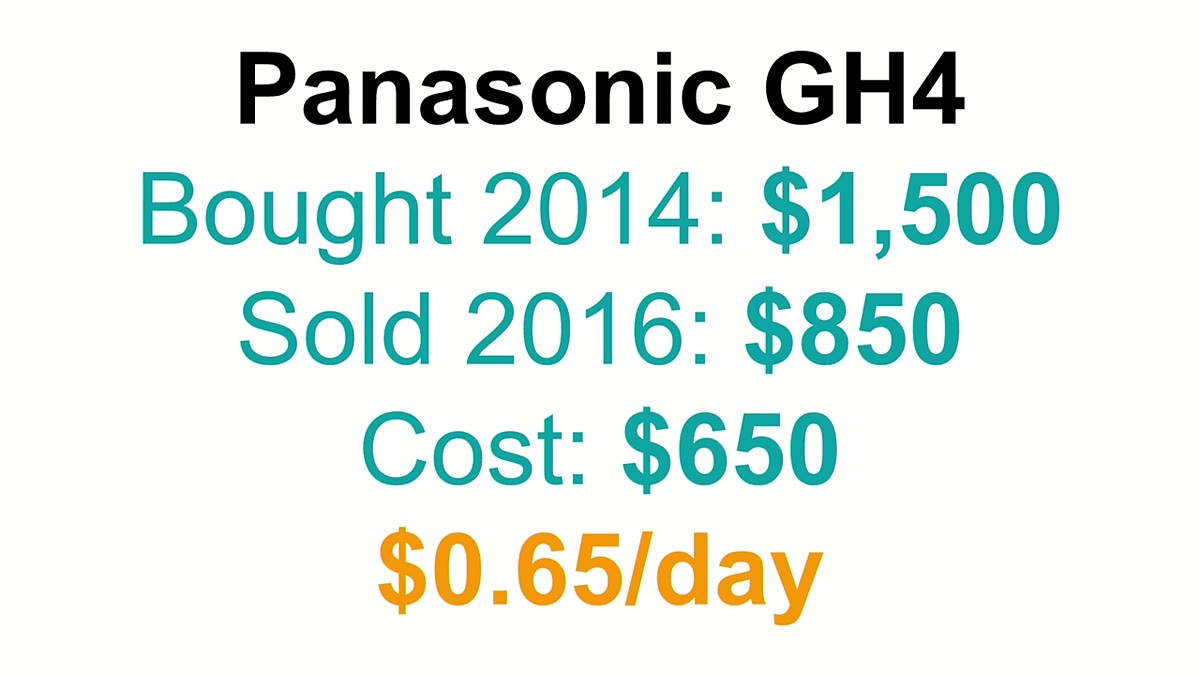 Tony reviewing Panasonic GH4 purchase and sale figures
Tony walks through real gear he and Chelsea bought and sold, and the pattern is clear. Camera bodies lose value quickly. A Panasonic GH4 bought new and sold a few years later netted a loss of several hundred dollars. A professional Canon 5D Mark III, used heavily for weddings and portrait work, cost close to a dollar a day when you broke the depreciation down over the ownership period.
The reason is the product cycle. Camera manufacturers refresh bodies every two to four years, and each new generation historically brought enough real improvements that the older model took a noticeable hit in resale value. When you buy a new body, you’re buying at the top of that depreciation curve. If you’re not actively using it and getting professional value from it, that daily cost adds up fast.
Step 3: Prioritize Lenses Over Bodies as Long-Term Holds
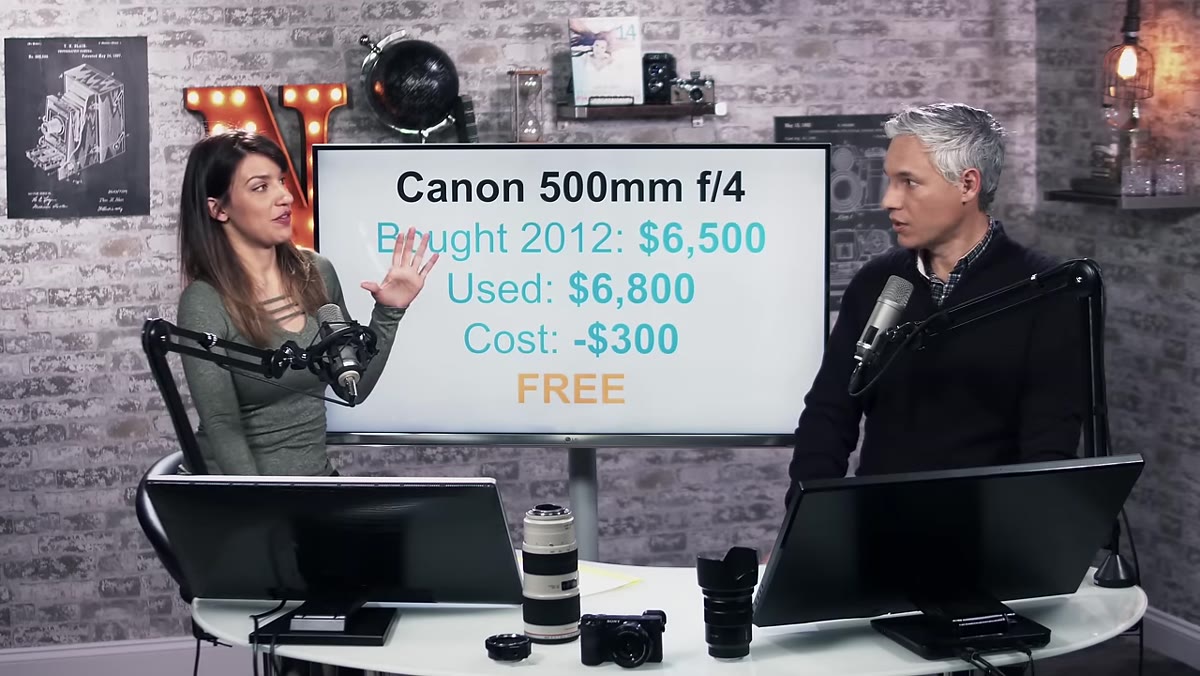 Tony and Chelsea discussing Canon 500mm lens resale value
Here’s where the tutorial gets interesting. Tony shares the story of a Canon 500mm f/4 that they bought for around $6,500. When Canon released the Mark II version at nearly double the price, the original suddenly became the affordable option and held its value unusually well. They could sell it today and actually come out ahead on the purchase.
Lenses follow a much longer replacement cycle, often eight to twelve years between major updates. That slower churn means used prices stay stable. If you’re thinking about where to put your gear budget, lenses are almost always the smarter long-term hold. A cheap body paired with a high-quality lens will cost you less over time than chasing body upgrades while using mediocre glass.
Step 4: Factor in the “Fluid Buying” Strategy
 Tony explaining buying and selling as a fluid cost strategy
One of the more practical ideas in the tutorial is treating gear buying and selling as a continuous loop rather than a one-time transaction. If you buy used gear in excellent condition, use it for a defined period, and sell it before the next generation drops, you can often keep your TCO very low. In some cases, this approach works out cheaper than renting, especially for gear you need repeatedly over a few months.
The key is timing. Selling before a major product announcement keeps your resale price higher. Selling after a new model launches means you’re competing with everyone else trying to offload the same body at the same time. Watch the rumor sites. Pay attention to product cycles. The difference between selling six months before an announcement and six months after can be hundreds of dollars on a mid-range body.
Step 5: Price Realistically by Researching Actual Sold Listings
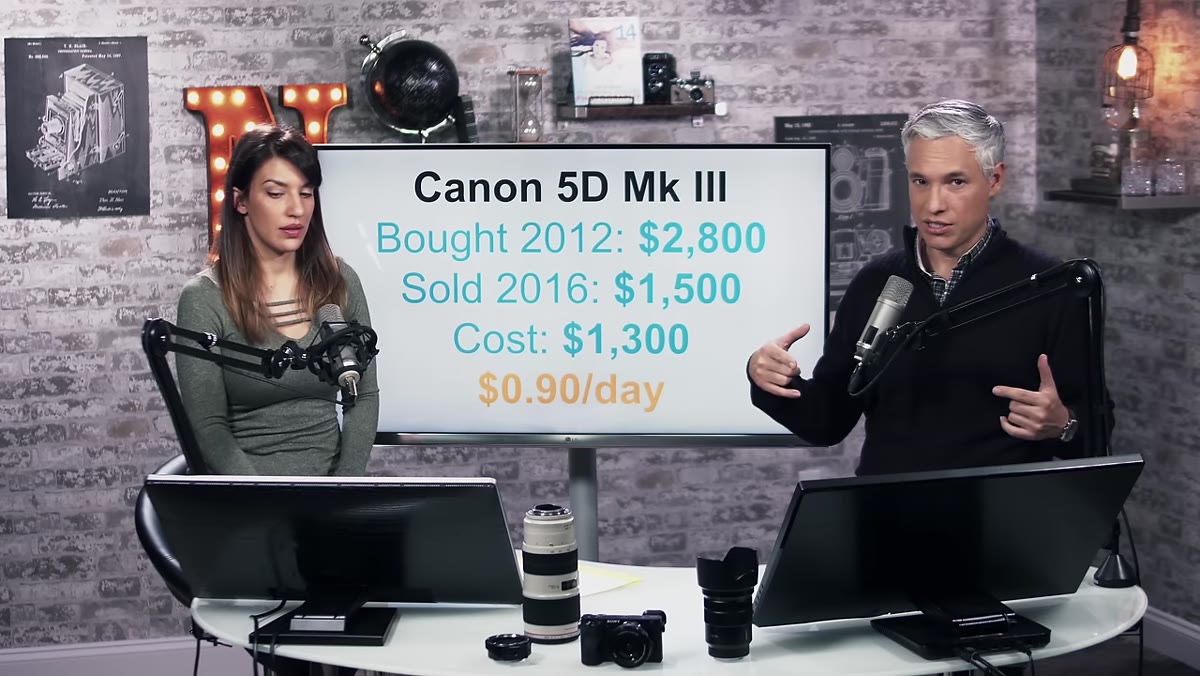 Discussion of camera value retention across different models
This step isn’t spelled out as a single moment in the tutorial, but it’s embedded throughout: know what your gear is actually worth before you list it. Not what asking prices look like on eBay or Facebook Marketplace. What completed, sold listings show. Those are the only numbers that matter.
Check sold listings on eBay, look at current prices on KEH and MPB, and cross-reference with B&H’s used section. Condition descriptions matter enormously. “Like new” and “excellent” can differ by $50 to $150 on the same body. Be honest about condition in your own listing, price slightly below the average sold price for your condition tier, and you’ll move gear quickly instead of letting it sit and depreciate further while you wait for a buyer who never comes.
My Take: The Spreadsheet Nobody Wants to Build but Everyone Needs
I’ve tested a lot of budget gear over the years, and the single most useful thing I’ve done for my own finances wasn’t finding a better deal. It was building a simple log of every piece of gear I’ve bought and sold. Purchase price, sale price, months owned, TCO per month. That’s it. After about six months of entries, patterns show up that change how you shop.
For me, the pattern was clear: I was undervaluing lenses and overbuying bodies. I’d grab a cheap body every time something new dropped, sell the old one at a loss, and feel like I was being smart about upgrades. I wasn’t. I was just cycling depreciation faster. Meanwhile the two lenses I bought early and held have barely lost value. The spreadsheet made that obvious in a way that gut feeling never did.
The single most important takeaway from this tutorial is also the simplest one: the price tag on the box is not what gear costs you. What it costs you is the gap between what you paid and what you recover when you sell, and that gap is almost always larger on bodies than lenses. Build your kit around glass. Be strategic about timing your sales. And track your actual numbers so you’re making decisions based on data, not optimism.
Watch the full tutorial on YouTube
Comments (2)
Just used this on a wedding shoot edit. Client was thrilled.
This is going in my reference folder. Incredibly useful.
Leave a Comment