I’ve spent years arguing that gear matters less than most people think. But even I’ll admit that who owns your gear matters quite a bit, especially when that company is on the edge of bankruptcy and just got acquired by a buyer that didn’t legally exist 48 hours before the deal was announced. When Tony Northrup dropped his breakdown of the GoPro acquisition, I cleared my morning and watched the whole thing. Tony spent weeks digging through SEC filings, a decade of GoPro financials, and the full merger agreement, so this isn’t hot take territory. This is documented, sourced, and genuinely strange.
Watch the full tutorial on YouTube
If you own a GoPro, are thinking about buying one, or you’re just paying attention to what’s happening to the camera industry, this breakdown matters. Here’s what Tony uncovered, reorganized into a clear sequence so you can absorb the important parts fast.
Step 1: Understand What Was Actually Sold (and For How Much)
 Tony introducing the GoPro sale breaking news
The headline number is $285 million in cash to existing shareholders, which works out to roughly $1.14 per share. That sounds small, and it is, but context is everything here. GoPro stock was sitting at about $0.60 just days before the announcement. Under a dollar put them in serious delisting territory on the Nasdaq. So shareholders are walking away with nearly double what the stock was worth the week before. The deal also wipes out $92 million in outstanding debt that GoPro was carrying, which means the real transaction value is closer to $377 million when you account for that.
Tony introducing the GoPro sale breaking news
The headline number is $285 million in cash to existing shareholders, which works out to roughly $1.14 per share. That sounds small, and it is, but context is everything here. GoPro stock was sitting at about $0.60 just days before the announcement. Under a dollar put them in serious delisting territory on the Nasdaq. So shareholders are walking away with nearly double what the stock was worth the week before. The deal also wipes out $92 million in outstanding debt that GoPro was carrying, which means the real transaction value is closer to $377 million when you account for that.
Existing shareholders also get a 10% collective stake in the new entity, which technically retains the GoPro name but is structured as a completely different company. It stays on the Nasdaq, which turns out to be one of the most important parts of this whole deal.
Step 2: Figure Out Who Actually Bought GoPro
 Tony explaining Starman Optics and its origins
The buyer is a company called Starman Optics, and here’s where it gets uncomfortable: Starman Optics was incorporated the day before the acquisition was announced. That’s not a typo. Tony dug into the registration documents and confirmed it. On paper, a company that had existed for roughly 24 hours purchased one of the most recognized camera brands in the world.
Tony explaining Starman Optics and its origins
The buyer is a company called Starman Optics, and here’s where it gets uncomfortable: Starman Optics was incorporated the day before the acquisition was announced. That’s not a typo. Tony dug into the registration documents and confirmed it. On paper, a company that had existed for roughly 24 hours purchased one of the most recognized camera brands in the world.
So who are they really? Starman is primarily a phone case company that pivoted into AI data center optics. The AI angle is relevant, and Tony gets into it later, but the point at this step is that this is not a traditional camera industry acquisition. There’s no obvious camera expertise or distribution infrastructure coming in from the buyer’s side. That’s either a problem or it’s not the point of the deal, which leads directly to the next step.
Step 3: Recognize What Starman Actually Wanted
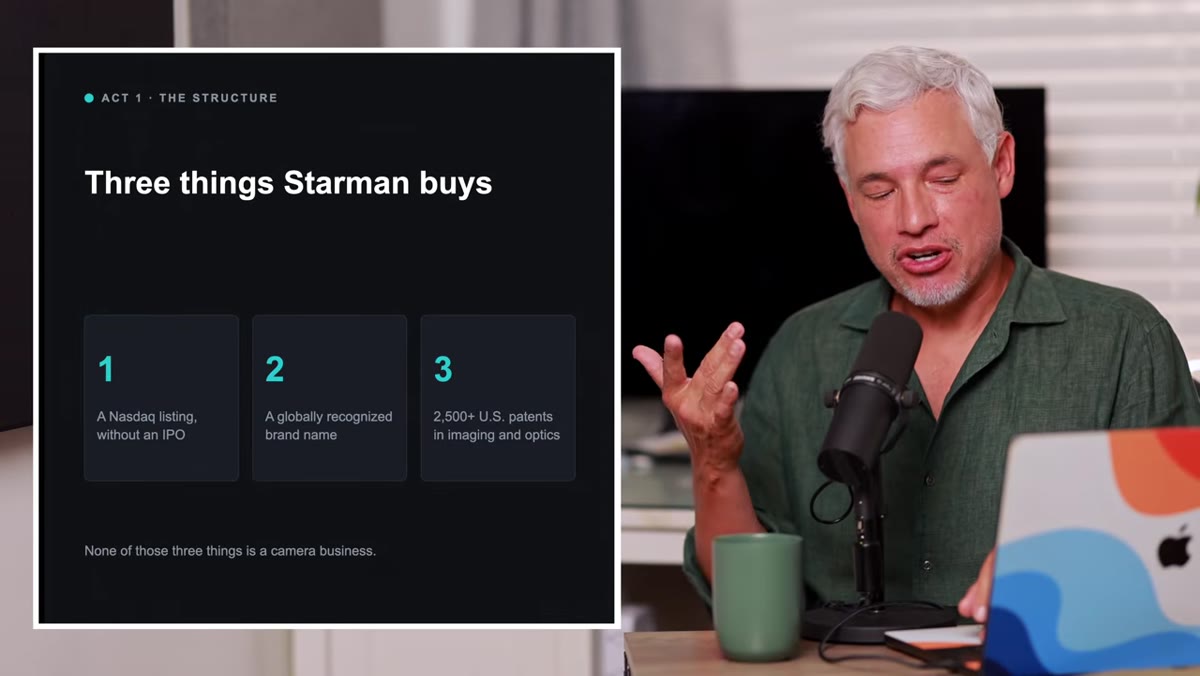 Tony listing the three assets Starman gains from the deal
Tony breaks down three things Starman is really buying, and cameras might be the least important one. First is the Nasdaq listing. Running an IPO is expensive, slow, and unpredictable. By reverse-merging into GoPro, a private company instantly becomes publicly traded without going through that process. That alone has real financial value, completely separate from anything GoPro makes or sells.
Tony listing the three assets Starman gains from the deal
Tony breaks down three things Starman is really buying, and cameras might be the least important one. First is the Nasdaq listing. Running an IPO is expensive, slow, and unpredictable. By reverse-merging into GoPro, a private company instantly becomes publicly traded without going through that process. That alone has real financial value, completely separate from anything GoPro makes or sells.
Second is the brand. GoPro is globally recognized even while financially struggling. That name still opens doors in retail, licensing, and international markets. Third is the patent portfolio: roughly 2,500 US patents covering imaging, optics, and stabilization technology. For a company pivoting into AI data center optics, patents in those categories could be genuinely useful, or at minimum, defensible. So when you look at it this way, the camera business itself might be secondary to what Starman actually came for.
Step 4: Track the Shareholder Vote Math
 Tony explaining Nick Woodman’s 60 percent voting control
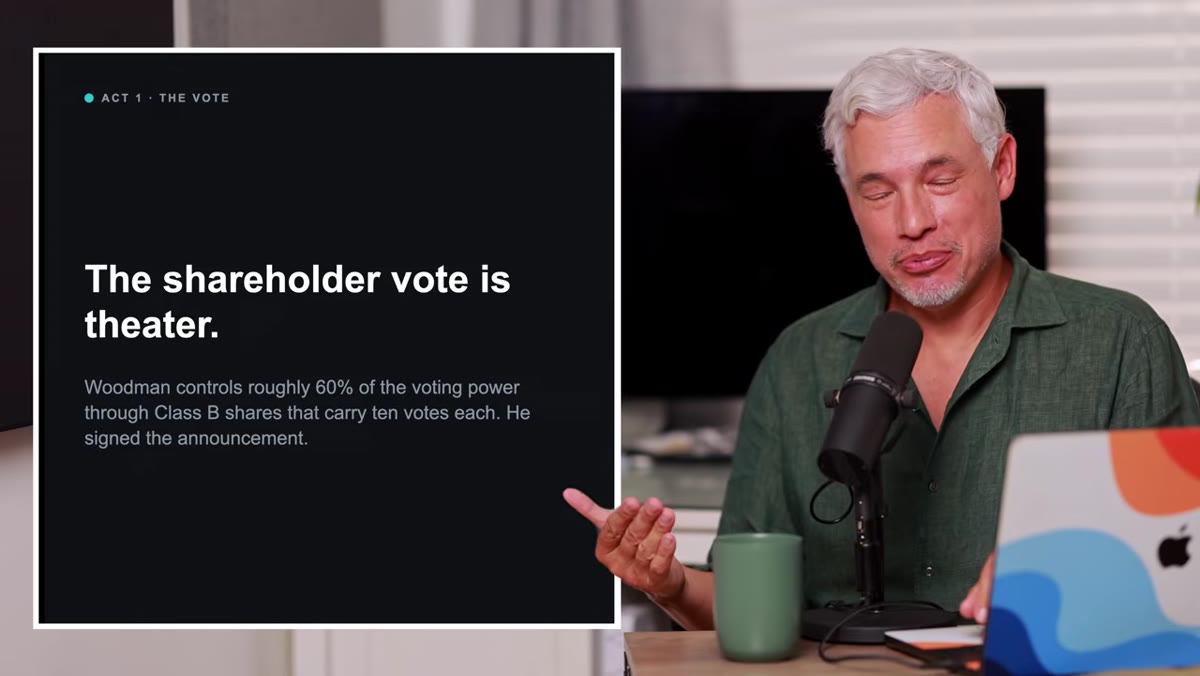
The deal requires both regulatory approval and a shareholder vote, but Tony is pretty direct about how that vote is almost certainly going to go. Nick Woodman, GoPro’s founder and CEO, controls 60% of the voting shares. He’s also the one who made the acquisition announcement. The shareholder vote is effectively a formality unless something dramatic changes between now and closing, which Tony expects to happen by end of 2026.
Tony explaining Nick Woodman’s 60 percent voting control
The deal requires both regulatory approval and a shareholder vote, but Tony is pretty direct about how that vote is almost certainly going to go. Nick Woodman, GoPro’s founder and CEO, controls 60% of the voting shares. He’s also the one who made the acquisition announcement. The shareholder vote is effectively a formality unless something dramatic changes between now and closing, which Tony expects to happen by end of 2026.
This is also where the governance structure of GoPro becomes visible. Woodman set up the company with a dual-class share structure years ago, which is common among founder-led tech companies. It let him retain control even as outside investors came in. The consequence now is that minority shareholders don’t really have meaningful say in the outcome.
Step 5: Understand the Markiplier Connection
 Tony referencing the YouTuber with undisclosed stock position
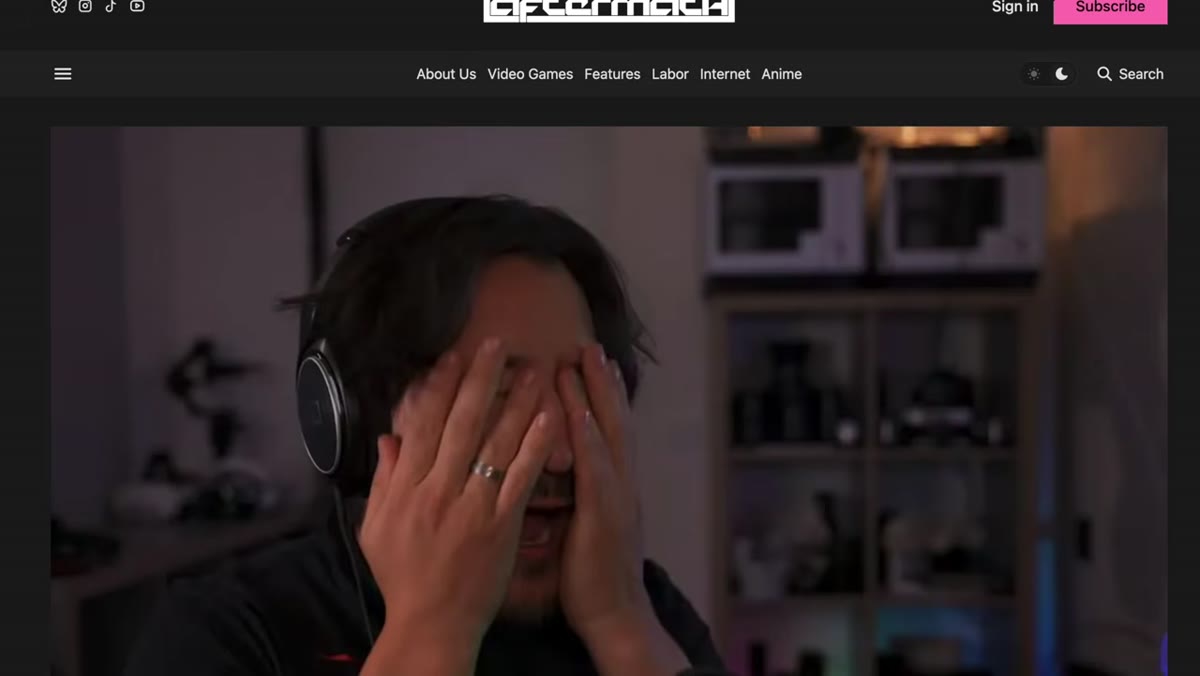
This is the part that sounds made up but is fully documented. A YouTuber named Markiplier (Mark Fischbach, 39 million subscribers) purchased more than $9 million worth of GoPro stock on July 13th. At the time, GoPro was trading around $0.60, putting it squarely in penny stock territory with bankruptcy conversations happening publicly. That’s a significant bet on a company most analysts were writing off.
Tony referencing the YouTuber with undisclosed stock position
This is the part that sounds made up but is fully documented. A YouTuber named Markiplier (Mark Fischbach, 39 million subscribers) purchased more than $9 million worth of GoPro stock on July 13th. At the time, GoPro was trading around $0.60, putting it squarely in penny stock territory with bankruptcy conversations happening publicly. That’s a significant bet on a company most analysts were writing off.
Shortly after, the acquisition was announced, and the stock more than tripled in three days. Markiplier disclosed the position in his content, but the timing and the scale of the investment raised eyebrows. Tony pulls the SEC filings that make this traceable. Markiplier is estimated to have a net worth somewhere between $25 and $50 million, so the position wasn’t reckless relative to his assets, but the timing relative to the announcement is the thing people are scrutinizing.
Step 6: Assess What This Means for Your GoPro Hardware
 Tony discussing Mission 1 Pro ILS and ongoing firmware support
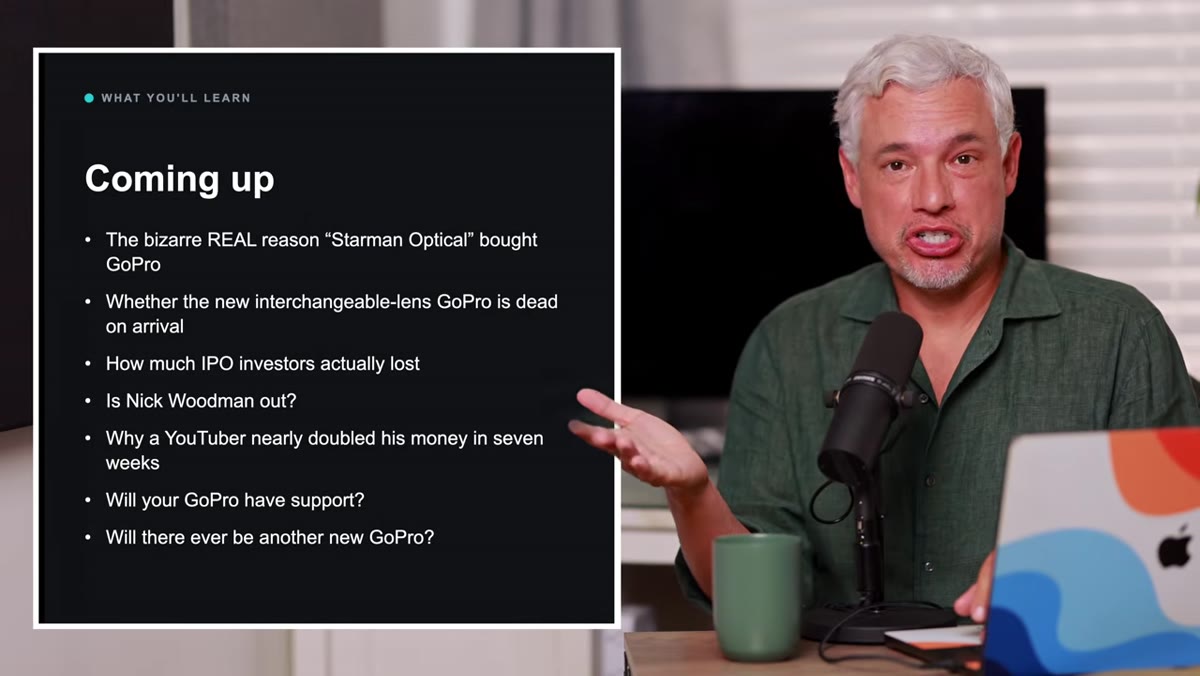
Here’s the part that matters most if you own or are thinking about buying a GoPro. The new Mission 1 Pro, which was GoPro’s ambitious interchangeable lens camera, is in uncertain territory. Tony’s honest assessment is that it’s unclear whether that product continues through development under new ownership or quietly dies. Starman has no established camera product pipeline, no obvious retail camera strategy, and no history of managing a hardware ecosystem.
Tony discussing Mission 1 Pro ILS and ongoing firmware support
Here’s the part that matters most if you own or are thinking about buying a GoPro. The new Mission 1 Pro, which was GoPro’s ambitious interchangeable lens camera, is in uncertain territory. Tony’s honest assessment is that it’s unclear whether that product continues through development under new ownership or quietly dies. Starman has no established camera product pipeline, no obvious retail camera strategy, and no history of managing a hardware ecosystem.
For existing GoPro users, firmware updates and cloud subscription support are also question marks. The infrastructure for both of those costs money to maintain, and the new owner hasn’t committed to specific timelines or guarantees in public statements. If you’re heavily invested in the GoPro subscription ecosystem, that’s worth watching closely before renewing.
What I’d Actually Do With This Information
I’m not here to tell you GoPro is dead. I’ve been wrong before about companies I thought were finished. But as someone who treats gear decisions like a spreadsheet problem, I’d be cautious right now about buying into the GoPro ecosystem at full price.
The Mission 1 Pro is especially tricky. Interchangeable lens action cameras are genuinely interesting, and if that product ever ships with real support behind it, I want to test it. But buying into a lens system from a company mid-acquisition, where the buyer has no camera track record, is a real risk. DJI and Insta360 are both stable, well-supported alternatives right now, and if you’re shopping for an action camera today, that stability matters as much as specs.
For budget-conscious shooters specifically: the used GoPro market is about to get interesting. People nervous about long-term support will sell, prices will drop, and a GoPro Hero 12 or 13 still produces genuinely excellent footage for the money. Just don’t count on cloud features being around forever.
The single most important takeaway from Tony’s breakdown is this: the acquisition wasn’t about cameras. It was about patents, public listings, and a brand name. Whether great cameras come out of that is a secondary bet that depends entirely on whether Starman decides to actually invest in the camera business. Watch how they handle firmware and subscription support in the next 12 months. That will tell you everything.
Watch the full tutorial on YouTube - Tony’s full video includes the complete financial breakdown, Woodman’s personal loan details, and his read on where the camera market goes from here. Worth the full watch.
Comments
Leave a Comment