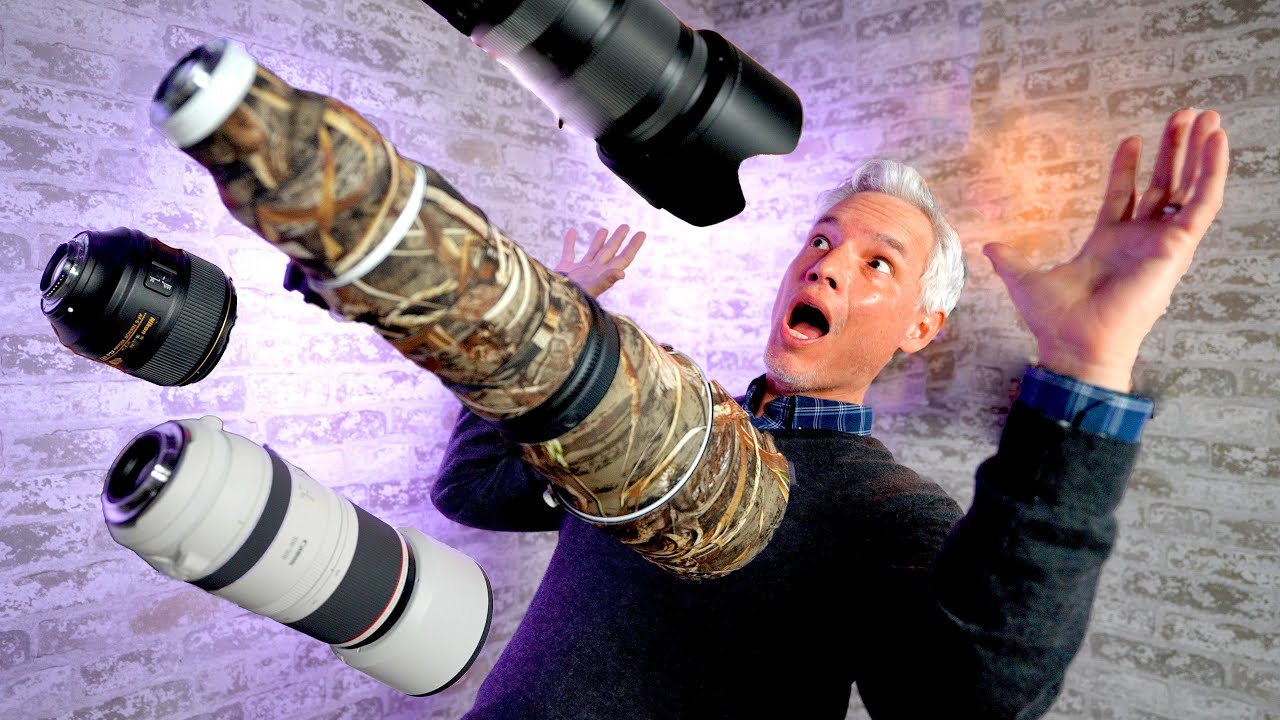
Every few months I’ll be deep in my deal-tracking spreadsheet, cross-referencing lens prices across a dozen retailer tabs, and I’ll realize I’ve spent three hours researching gear I might buy instead of actually planning what I want to shoot. That habit did save me once, though. I spotted a price drop on a third-party prime the same week a new first-party lens was announced, and I understood immediately that the announcement had quietly devalued everything adjacent to it. Knowing what’s coming is half the job when you’re trying to buy smart.
That’s why I kept coming back to this particular video from Tony and Chelsea Northrup, who consistently do the legwork of aggregating leaks and official announcements into something coherent. In this Tony & Chelsea Northrup tutorial, Tony breaks down more than a dozen incoming lenses across Sony, Nikon, and Canon, and also flags something that genuinely caught me off guard: manufacturers are raising MSRPs on existing gear, not just new releases. If you’re holding out on a purchase right now, this video changes the calculus.
Here’s the full walkthrough of what they cover and what it actually means if you’re shopping in this market.
Step 1: Understand Why Prices Are Rising Before You Buy Anything
 Tony explaining inflation and price hikes across camera brands
Before getting into specific lenses, Tony sets up the broader economic context, and it’s not just throat-clearing. Multiple major brands, including Canon, Nikon, Sony, Leica, Tokina, and Zeiss, are raising MSRPs on products that are already on shelves. This is not the normal pattern. Historically, photography gear peaks in price at launch and drifts downward over time. A lens you’ve been watching for two years at the same price might genuinely cost more next month.
Tony explaining inflation and price hikes across camera brands
Before getting into specific lenses, Tony sets up the broader economic context, and it’s not just throat-clearing. Multiple major brands, including Canon, Nikon, Sony, Leica, Tokina, and Zeiss, are raising MSRPs on products that are already on shelves. This is not the normal pattern. Historically, photography gear peaks in price at launch and drifts downward over time. A lens you’ve been watching for two years at the same price might genuinely cost more next month.
If you’ve been waiting for a deal on an existing lens, now is the time to reassess whether waiting is still the right move. I always say patience wins in this hobby, but that rule assumes prices trend down. Right now, that assumption is broken.
Step 2: Evaluate the Sony 16-35mm as a Confirmed Wide-Angle Option
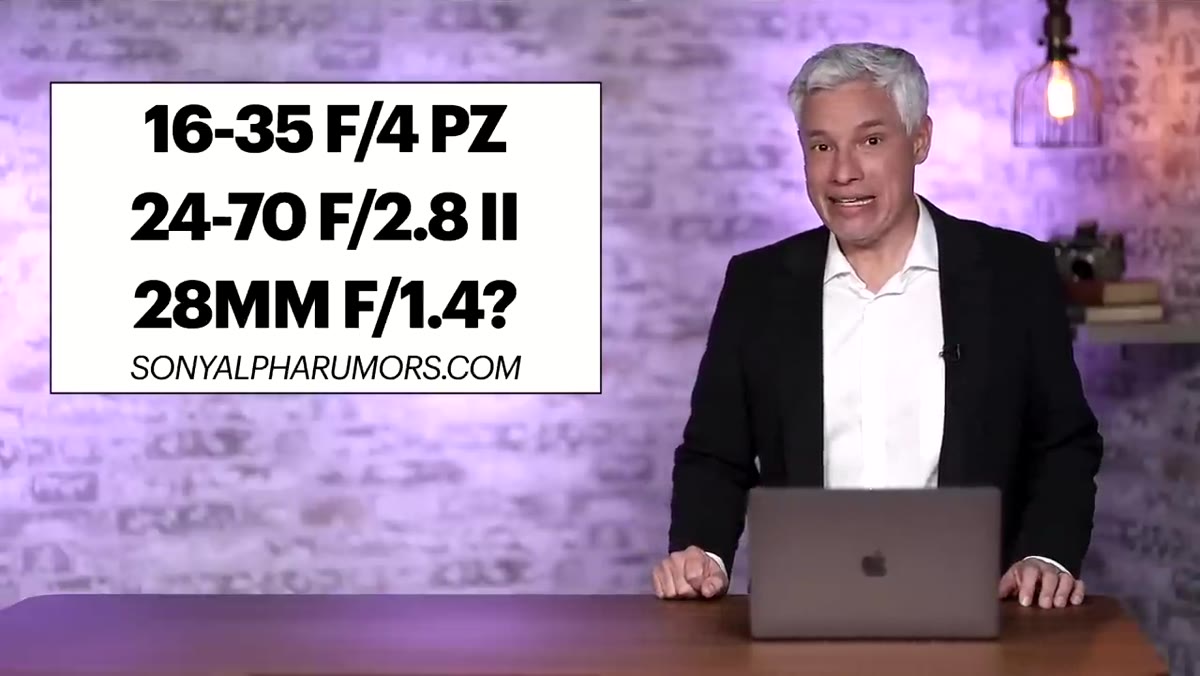 Tony announcing Sony 16-35 lens confirmation and upcoming review
The Sony 16-35mm wide-angle lens is officially out, not just rumored. Tony had early access but couldn’t publish his review in time due to an unrelated emergency, so the teaser here is brief. But the signal he sends is clear: recent Sony lenses have been dramatically sharper than their predecessors, and this one fits that pattern.
Tony announcing Sony 16-35 lens confirmation and upcoming review
The Sony 16-35mm wide-angle lens is officially out, not just rumored. Tony had early access but couldn’t publish his review in time due to an unrelated emergency, so the teaser here is brief. But the signal he sends is clear: recent Sony lenses have been dramatically sharper than their predecessors, and this one fits that pattern.
If you shoot landscapes, architecture, or any interior work on a Sony mirrorless body, this is a serious option to put on your radar. The newer Sony glass has been closing the gap on Canon and Nikon wide-angles that used to have a clear quality edge. Don’t assume the older Sony wide-angle lineup represents what this lens will deliver.
Step 3: Decide Whether to Wait for the Sony 24-70mm f/2.8 Mark II
 Discussion of Sony 24-70 f2.8 Mark II specs and predecessor comparison
This is the one I’m personally most interested in watching. The original Sony 24-70mm f/2.8 was serviceable but underwhelming for a flagship zoom. Tony even switched to using a Canon 24-70mm on an adapter because it outperformed the native Sony option on sharpness and contrast. That’s not a ringing endorsement for a lens that carries a premium price tag.
Discussion of Sony 24-70 f2.8 Mark II specs and predecessor comparison
This is the one I’m personally most interested in watching. The original Sony 24-70mm f/2.8 was serviceable but underwhelming for a flagship zoom. Tony even switched to using a Canon 24-70mm on an adapter because it outperformed the native Sony option on sharpness and contrast. That’s not a ringing endorsement for a lens that carries a premium price tag.
The Mark II is confirmed incoming, and the precedent Tony points to is the Sony 70-200mm upgrade, which turned a middling performer into one of the best in class. If Sony applies the same engineering approach here, this could be the 24-70mm that Sony shooters actually want as their go-to workhorse. If you’re currently on the fence about buying the original, I’d park that money and wait.
Step 4: Track the Sony 28mm f/1.4 Prime Rumor Without Over-Committing
 Tony referencing Sony Alpharumors source for 28mm f1.4 leak
There’s a looser rumor, sourced from Sony Alpha Rumors, that a 28mm f/1.4 prime is in development. Tony’s reasoning for taking it seriously: it’s too boring a lens to fabricate. Someone manufacturing hype would invent something flashier. The 28mm slot is a genuine gap in Sony’s fast prime lineup, and filling it makes logical sense from a product planning perspective.
Tony referencing Sony Alpharumors source for 28mm f1.4 leak
There’s a looser rumor, sourced from Sony Alpha Rumors, that a 28mm f/1.4 prime is in development. Tony’s reasoning for taking it seriously: it’s too boring a lens to fabricate. Someone manufacturing hype would invent something flashier. The 28mm slot is a genuine gap in Sony’s fast prime lineup, and filling it makes logical sense from a product planning perspective.
This one requires patience and skepticism in equal measure. It’s not confirmed, it hasn’t been officially acknowledged, and no specs have been detailed beyond focal length and aperture. Keep it on your watchlist, but don’t let it stall a buying decision you need to make today.
Step 5: Pay Attention to Nikon’s 800mm f/6.3 for What It Signals About Mirrorless Design
 Nikon 800mm f6.3 announcement and aperture explanation
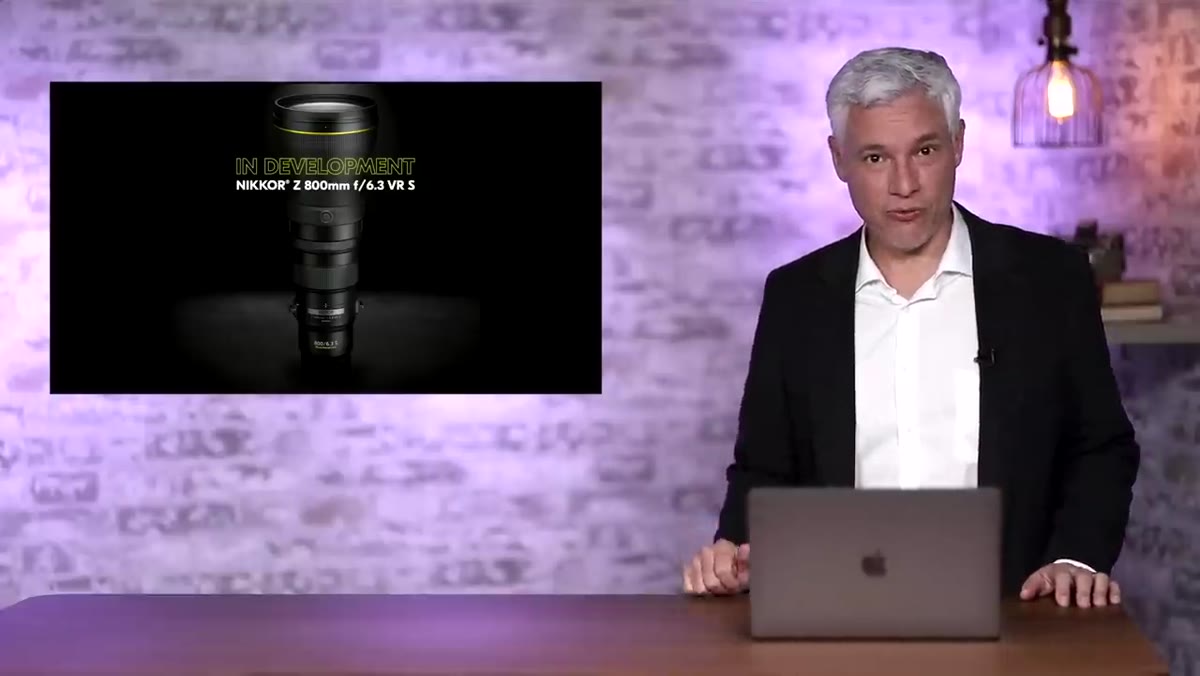
Nikon officially announced an 800mm f/6.3 in development, which is worth pausing on because the f-stop is unusual. The industry standard for super-telephoto glass at that focal length has been f/5.6, and that number wasn’t arbitrary. It existed because many DSLRs couldn’t autofocus reliably with anything smaller than f/5.6. Mirrorless cameras removed that constraint entirely.
Nikon 800mm f6.3 announcement and aperture explanation
Nikon officially announced an 800mm f/6.3 in development, which is worth pausing on because the f-stop is unusual. The industry standard for super-telephoto glass at that focal length has been f/5.6, and that number wasn’t arbitrary. It existed because many DSLRs couldn’t autofocus reliably with anything smaller than f/5.6. Mirrorless cameras removed that constraint entirely.
What this means practically: mirrorless-era telephoto designs can prioritize size and weight savings without sacrificing autofocus performance. The Nikon 800mm f/6.3 will almost certainly be lighter and smaller than a comparable DSLR-era 800mm at f/5.6, and it should still track subjects accurately on the Z9. For wildlife and sports shooters who’ve been reluctant to switch systems, this kind of lens development is the reason to reconsider Nikon Z.
Step 6: Watch the Nikon 400mm f/2.8 as a Marker of System Maturity
 Nikon 400mm f2.8 mentioned alongside Z9 system development
Alongside the 800mm, Nikon confirmed a 400mm f/2.8 for the Z system. The context Tony provides matters here: Nikon was intentionally holding back professional telephoto glass until the Z9 existed, because there was no body that could do the lenses justice. Now that the Z9 is out and its autofocus system has been widely reviewed as competitive with Canon’s best, the professional lens roadmap starts making sense.
Nikon 400mm f2.8 mentioned alongside Z9 system development
Alongside the 800mm, Nikon confirmed a 400mm f/2.8 for the Z system. The context Tony provides matters here: Nikon was intentionally holding back professional telephoto glass until the Z9 existed, because there was no body that could do the lenses justice. Now that the Z9 is out and its autofocus system has been widely reviewed as competitive with Canon’s best, the professional lens roadmap starts making sense.
For buyers, this means the Nikon Z system is finally worth serious consideration for professional sports and wildlife work. The body was there; the glass commitment is now catching up. If you’ve been watching the Z system from the sidelines, the next 12 months of Nikon releases are the ones to track closely.
My Take: Use Announcements as a Price Signal, Not Just a Shopping List
I’ve been doing this long enough to know that lens announcements affect more than just the new product. When Sony announces a 24-70mm Mark II, the used market for the original softens. When Nikon signals a serious telephoto roadmap, competitors sometimes quietly adjust pricing to stay competitive. I check the used listings on major platforms within 48 hours of any major announcement, because that’s when you’ll find people offloading older versions at the lowest prices before the rest of the market catches on.
The inflation point from the video complicates this a little. Used prices are also creeping up. But the window right after an announcement, before the new lens ships, is still often the best moment to find the previous generation at a fair price. Set your alerts now and move fast when you see the right number.
The single most important thing this video communicates is that the old rule of “wait and the price will drop” no longer applies cleanly. Between MSRP increases on existing gear and a flood of new releases reshuffling the value hierarchy, buying decisions require more real-time attention than they used to. Watch the full breakdown and decide which of these lenses belongs on your own list: Watch the full tutorial on YouTube.
Comments (2)
This is exactly what I needed today. Been struggling with this for weeks.
Would love to see a follow-up going deeper into this topic.
Leave a Comment